
How to Search Civil Dockets
Start at Indiana MyCase for a public Jefferson County civil docket. The best tool is a full cause number. Without one, try the Name or Business Name search. Pick Jefferson County. Then narrow the results by civil category, status, or filing-date range. An attorney search also works when the caption is a mystery.
Search both Jefferson Circuit and Superior when no number points to a court. Converted older cases can hide a valid result behind a narrow filter. So can dynamic category keys.
- Choose the Case, Name, Business Name, or Attorney search.
- Enter the most exact value and select Jefferson County.
- Confirm the court, category, filing date, status, and party role.
- Read the complaint or petition, service, response, motions, orders, and disposition in order.
- Request a public copy from the Clerk when an image is missing.
The free Case Summary is only an index to the public chronology, not a certified judgment.
Jefferson Civil Docket Codes
Every Indiana cause number opens with a court identifier. Jefferson Circuit uses 39C01, while Jefferson Superior uses 39D01. The case-type group signals how the case was allocated, and local rules name CC, CT, MF, and MI original actions for Superior when filed after December 31, 2025.
- CC
- A civil collection case-type allocation clue.
- CT
- A civil tort case-type allocation clue.
- MF
- A mortgage foreclosure category.
- MI
- A miscellaneous civil category named in the local allocation rule.
- Service
- Delivery or attempted delivery of process or notice.
A code tells you what kind of case was filed, nothing more. It never shows who won. For that, read the judgment, dismissal, transfer, or a later order.
What a Civil Docket Shows
The header of a Jefferson County civil docket names the court, case number, category, filing date, status, judicial officer, and case style. A parties block sorts out roles and counsel. From there, the chronology can run from the initiating pleading through summons, return of service, responses, motions, hearing notices, orders, settlement events, judgment, and post-judgment work.
| Header | Court, cause number, category, filed date, status, and judicial officer. |
|---|---|
| Parties | Plaintiff, petitioner, defendant, respondent, counsel, appearance, and role. |
| Service | Summons or notice issued, method, return, and status. |
| Motions and Orders | Requests, responses, hearing notices, rulings, and public document links. |
| Outcome | Judgment, dismissal, transfer, closure, appeal, satisfaction, or modification. |
MyCase warns that financial data may lag. Confirm any balance or enforceable order against the official file.
Jefferson Service Before Default
A complaint is only an allegation. Treat it as a claim, not a judgment. First check that the named party and court match the case you care about. Then find the summons or notice and the service return before reading any default-related entry, because a filing date alone never proves notice was completed.
Next, hunt for an answer, appearance, counterclaim, or motion. A default request is not a default judgment. The order tells you what the judge actually did, and later entries may set aside, modify, enforce, or satisfy the judgment.
Reading rule: Treat each civil filing as one step. Pair a request with the order, and pair a judgment with later appeal, payment, enforcement, or satisfaction events.
Types of Civil Cases on the Docket
Both Jefferson Circuit and Superior hear civil matters. The 2026 local allocation rule assigns categories and allows reassignment. Circuit handles listed family, probate, paternity, IV-D, mental-health, juvenile, CHINS, and certain original civil matters. Superior takes CC, CT, MF, and MI actions under the new filing allocation.
Superior also serves as the county's small-claims court. Evictions with alleged damages of $10,000 or less land there. The county source does not place every dispute below one dollar line in that court. Let the published category and court assignment control.
| Matter | Starting Court Clue | What to Confirm |
|---|---|---|
| Small claims | Superior | SC category, parties, and filing date |
| Qualifying eviction | Superior | Claim and damages stated in the filing |
| Probate or family | Circuit allocation | Confidentiality and case type |
| CC, CT, MF, MI | Superior for covered new filings | Cause number and any reassignment |
Jefferson Civil Fees and Copies
Opening a case costs money. The official Jefferson County civil filing page lists the charges: Small Claims at $97; standard civil, civil plenary, adoption, mortgage foreclosure, and domestic relations at $157; probate estate, guardianship, trust, and juvenile paternity rows at $177; and sheriff service at $28 per case.
Those figures are filing charges only. They are not the price of pulling a civil docket or a certified judgment. The county publishes no current plain-copy, certified-copy, search, or turnaround fee, so verify costs with the Clerk before ordering. The fee page carries the current schedule.
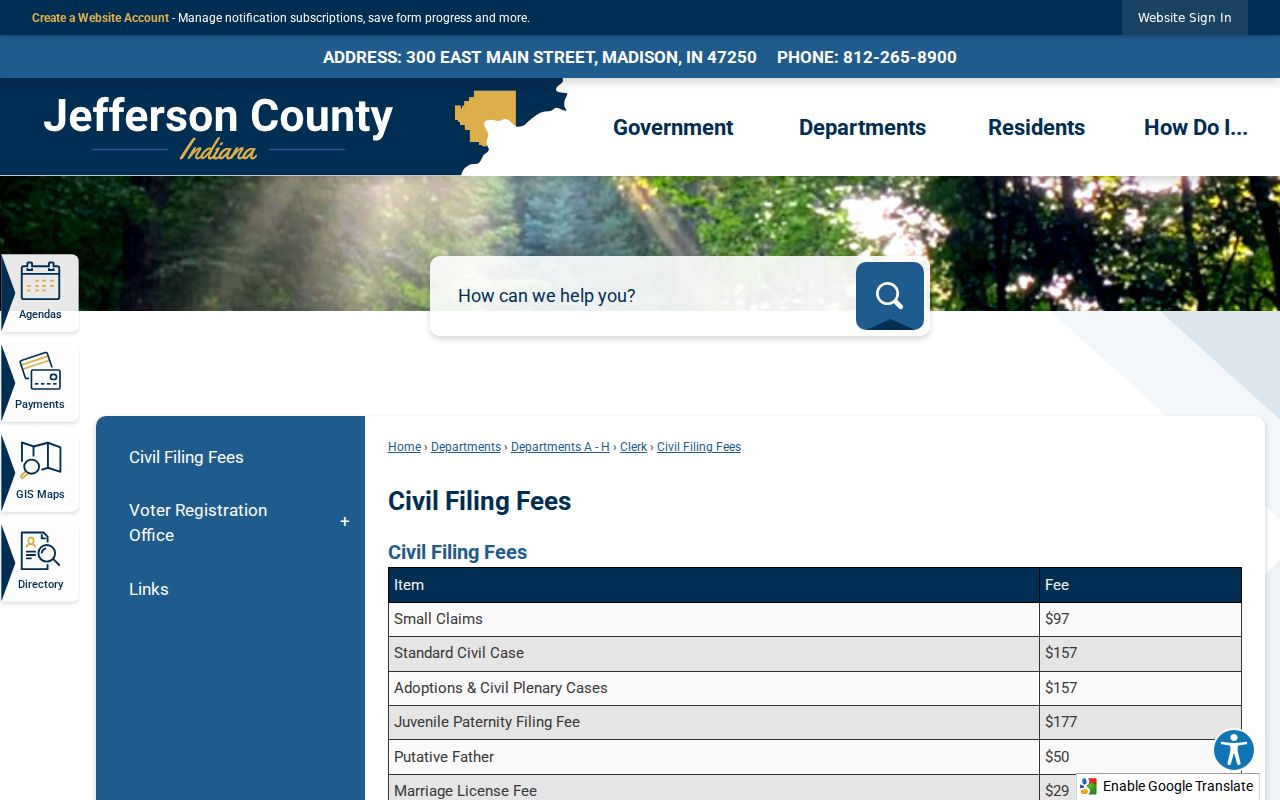
The published rows help a filer budget for opening a case. They say nothing about a later record-copy fee.
Settings and Hearings on Civil Dockets
Civil chronology entries can include case-management conferences, motion hearings, mediation, pretrial settings, trials, and continuances. A notice proves an event was scheduled. It does not prove the event happened or that a motion was granted. Look for the hearing result and the later order.
Check the Indiana Hearing Calendar for a near-term setting. Then return to MyCase for the fuller history. After a reset, the old event may stay in the chronology. A later notice gives the current date.
Conflicting dates? Call Jefferson Circuit at 812-265-8930 or Jefferson Superior at 812-265-8914. Give the full cause number and ask which event stands. Court staff can confirm scheduling but cannot give legal advice.
Jefferson Civil Filing Counts
Certified Indiana Court Online Reports for 2024 count 1,692 new civil filings across Jefferson County courts. Those are cases filed, not unique people, judgments, or measures of success. Inside the total sit 553 collections, 185 evictions, 134 small claims, 187 protective orders, and other categories.
Numbers like these explain why one name search can return several results. Match court, role, filing date, and category before reading the chronology.
Public Access to Civil Dockets
Indiana Access Rule 4 opens most court records to the public. Rule 5 pulls certain cases, filings, and data back out of view. The excluded categories run wide. They include family, juvenile, paternity, mental-health, medical, treatment, custody-evaluation, and victim material, plus personal identifiers. Special limits can attach to any of it.
Reading a civil docket takes some care. An event may sit in public view. Its attachment can stay unavailable. A sealed or confidential case can display little or nothing at all. Age or file conversion also hides images, so an empty spot does not prove sealing.
There is one more door. Rule 9 lets a person file a verified request for extraordinary access, arguing public interest against harm, and the court rules on it. For an ordinary missing public copy, though, go to the Jefferson County Clerk first.
Missing Jefferson Civil Images
Where do the official Circuit and Superior case files live? With the Jefferson County Clerk. The office sits in Room 203 at 300 East Main Street, Madison, Indiana 47250. Call 812-265-8922 during published weekday hours, 8:00 a.m. to 4:00 p.m.
Requesting a civil docket copy? Give the cause number. Give the court, the document title, and an approximate date. Say whether you want a plain or certified copy. For an older matter that has been converted, ask whether a public paper or archive item survives. Transcripts are different. Contact the court reporter. The local $5-per-page base transcript rate is not a Clerk copy fee.
The county also runs a Payment Center, and that page shows how its payment channels work separately.
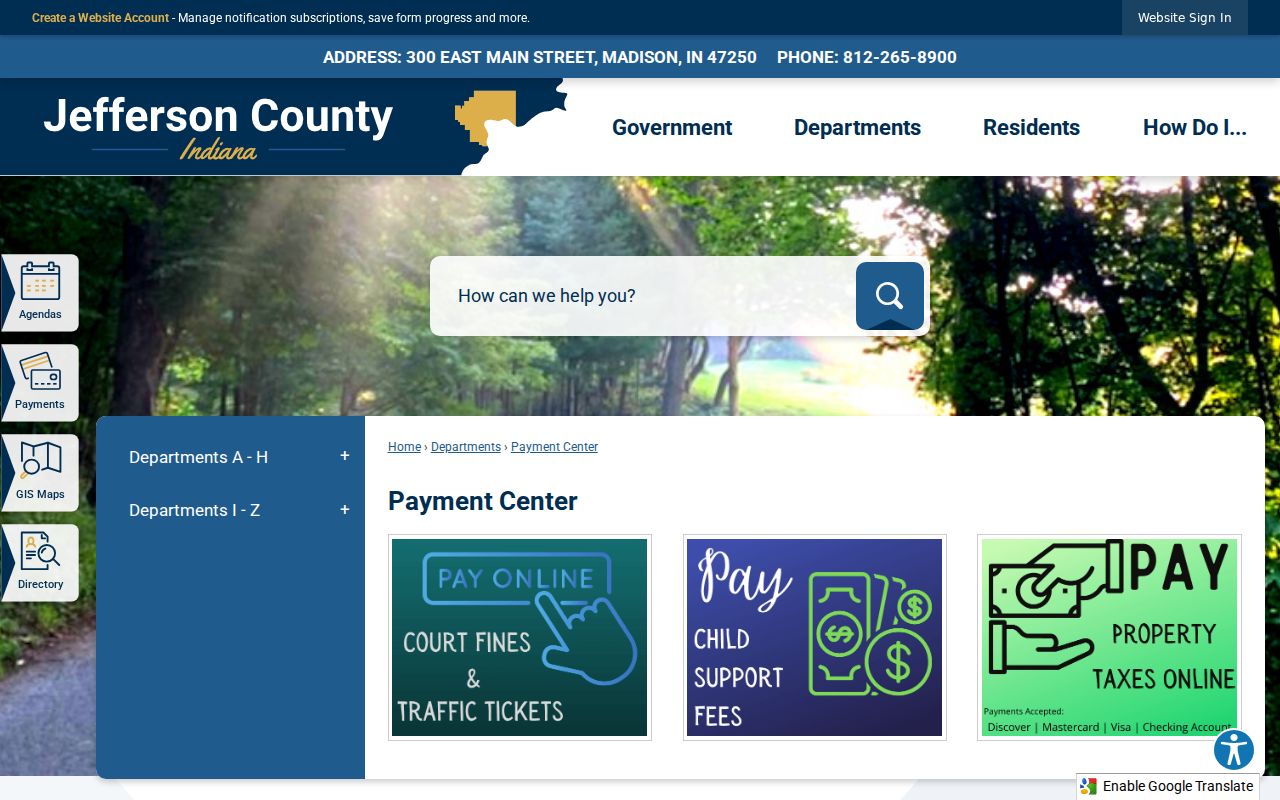
Paying online settles a fee. It does not replace the civil chronology, the judgment, or the Clerk's official file.
Mail or fax may work once you coordinate with the office. The clerk sets the price. Call ahead for instructions, payment, delivery time, and return-address needs. Skip mailing cash unless told otherwise. Note that the archive page's $1-per-page paper-copy figure covers the archive material it describes, not necessarily every current civil file.